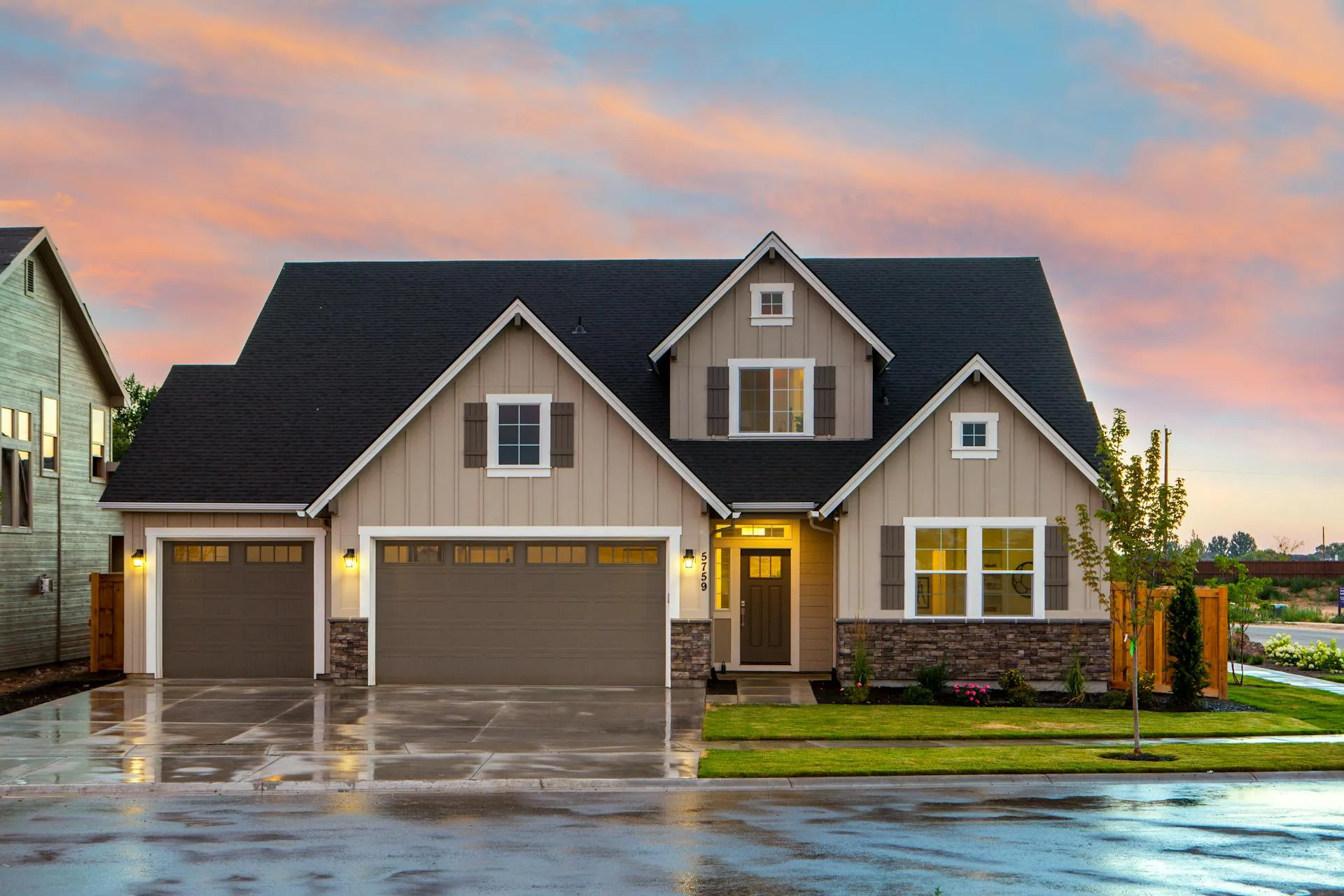
What if the homes we cherish could keep giving, forever?
The Lasting Legacy Foundation is reimagining estate planning by transforming donated real estate into a perpetual engine for community impact.
The Greatest Wealth Transfer in History
The greatest wealth transfer of all time is currently underway, with upwards of $124 trillion in assets expected to change hands through 2048. This represents an enormous opportunity to address so many of the issues we face today — but unfortunately, most of that inherited wealth is expected to be lost. According to a widely cited study, roughly 70 percent by the end of the second generation and 90 percent by the end of the third generation.
The problem isn't investment strategies — it's human nature. When we receive something without putting in the hard work, especially when it's a large sum of money, most people and especially organizations tend to burn through it pretty quickly.
The other elephant in the room is that as AI displaces more jobs, more people will be facing challenging financial hardships and turning to charities to help them get by. Yet the charitable giving landscape isn't structured to handle what's coming.
Real estate is a huge portion of household wealth, yet only about 3% of charitable giving involves real estate gifts. There is a lot being left on the table — and most charities don't have the operational capacity or risk tolerance to change that. We do.
Our Vision: Leases-to-Grants
Our vision is to disrupt the current charitable giving landscape by accepting donated real estate into our 501(c)(3) nonprofit, leasing it out, and using the revenue to fund grants to the most impactful nonprofits based on each donor's wishes.
Our intention is to 10X or even 100X the level of impact in the long term compared to the traditional model of donating real estate to nonprofits, which typically liquidate it immediately to fund their programs.
Imagine how hard it is to predict the future — your favorite nonprofit today may end up being woefully inadequate or even practically useless a couple of decades from now. That's why we're so adamant about our Leases-to-Grants model, where grant managers can discern which nonprofits can make the best use of your estate's revenue at any given time.
The Leases-to-Grants Cycle
- 1. Accept — Donated real estate enters the foundation via Retained Life Estate, Charitable Remainder Trust (CRT), or outright gift
- 2. Lease — We lease the property to vetted tenants or convert larger homes into co-living communities
- 3. Grant — Lease revenue funds ongoing, performance-based grants to nonprofits the donor cares about
- 4. Grow — The donor's name appears on every grant. Property appreciates. Perpetual impact multiplies for decades.
Donors simply stipulate which causes they are passionate about and any additional criteria that matter to them. Grants also ensure accountability, which is missing from the traditional model of donating your estate to a single nonprofit. And smaller nonprofits typically stretch the dollar further per unit of impact, since they're closer to the problems.
A Better Way for Families
For elders with families, there's an even tougher choice: how to divvy up an estate between family members, and how to ensure the properties meant to remain in the family forever won't be squandered or cause rifts among heirs contending over what to do.
For families who want to make sure that their heirs are provided for, we offer a hybrid approach where a portion of their estate can be put into a carefully designed trust meant to empower without enabling. The rest flows into the Leases-to-Grants model so both family and community benefit — not one at the expense of the other.
We believe this is the best way to ensure the wellbeing of loved ones while also protecting properties from falling into disarray. Not to mention the burden that some families feel in having to handle estates properly after the fact.
Retained Life Estate
A Retained Life Estate allows a donor to donate their property to the foundation but continue to live in it for the rest of their life or a set term — while receiving a meaningful tax deduction based on the present value of the remainder interest. You keep your home. Your legacy begins now.
We also utilize multiple other legal vehicles, such as Charitable Remainder Trusts, that allow donors to maximize their tax benefits while ensuring that charities will be able to make much better use of the money than any alternative. We work with top legal service providers to create playbooks for these structures while keeping administrative fees low.
The Overlooked Opportunity
The cash-poor yet house-rich crowd is often overlooked — their wealth is seen as illiquid. Yet there are trillions of dollars of equity sitting in American homes, with over 35 million households carrying no mortgage at all. Traditional wealth advisors completely overlook folks under $2 million in assets, but that's still significant wealth that can make a huge difference if managed properly.
In certain situations, we can even provide carry-cost relief so that seniors don't end up losing their homes due to taxes or insurance costs — which is one of the most tragic things a senior can experience. This is a win-win: it allows them to safely live out the rest of their days in their beloved home without fear, while Lasting Legacy still nets a positive return after they pass as the lease revenue pays down these costs.
If a benefactor's only home is the majority of their estate and they want to ensure descendants will have a safety net, we have creative ways to structure the home into an LLC divided between a private trust and the foundation — putting enough in trust to ensure a sufficient backup for heirs, and over time using lease revenue to buy out the remaining interest.
Most charities won't touch homes unless they are completely paid off, and many require environmental assessments at the donor's expense. Plenty refuse outright. With our operational model, we can take on properties that have some debt, knowing we can pay it off within a reasonable timeframe — and we can handle assets that other nonprofits simply can't.
Partnerships as the Key
Many nonprofits are leaving enormous value on the table by declining real estate and other special assets because they aren't easy to liquidate. We propose a win-win approach: they refer the donor to us, we receive the asset, and the referring nonprofit is named as a beneficiary — getting even more funding in the long run without having to do anything except make a referral.
Another enormous benefit is that nonprofits do much better with consistent donations rather than huge one-time gifts. Our approach allows them to plan much more effectively and sustainably.
Our intention is to become the special assets partner for nonprofits and Donor-Advised Funds (DAFs), so they almost never have to decline a gift and don't get saddled with enormous fees from for-profit third parties, which they currently rely upon to handle non-cash gifts. Providing these Special Assets Services is our key to generating interim revenue that allows us to be self-sustaining while we build the long-term donated homes portfolio.
We believe that the biggest opportunities lie in partnerships with estate attorneys and financial advisors — professionals who are already having conversations about legacy with the people we want to serve. We plan to engage with civic organizations like Rotary Club and Lions Club, which have high percentages of older, altruistic individuals who resonate deeply with this vision.
Building Resilient Communities
We believe that intentional communities are the way of the future — especially given how many jobs are going to be displaced by AI, and especially because so many people in younger generations have given up hope of ever owning a home due to cost.
This co-living community aspect was actually the original inspiration for the Lasting Legacy Foundation vision. From our perspective, it's such a beautiful feeling knowing that a home that was cherished will then be cherished in perpetuity by grateful people living there as a community.
One of the most ambitious aspects of our vision is to help create hundreds or even thousands of new co-living communities by leasing our larger properties to people we believe can be amazing stewards and community managers. This model is meant to provide a type of affordable housing that is effectively subsidized, and incentivize members for caring for the property and land properly.
We believe this model may have an even larger impact than some traditional charitable donations, since it's all about empowering people to live cohesively — which can help tremendously with the loneliness and mental health epidemics that are quietly devastating so many communities today. The main keys are comprehensive co-living playbooks that take a realistic view of human behavior, and vetting the right community operators who work within a well-defined container.
Running Nonprofits Like Startups
Most nonprofits struggle with operations and complexity, which is why they choose to just liquidate real estate immediately — without timing the market or being willing to invest in even minor capital improvements. We are approaching operations from a scrappy startup mindset, where the complexity and partnerships become our moat.
Our intention is to show how it's possible for nonprofits to operate extremely efficiently — just like for-profit startups — without losing their soul. This is not about being cold or transactional. It's about being serious about impact, not just good intentions.
Our other interim revenue source is providing Fiscal Sponsorship services to projects we believe in. Fiscal Sponsorship is ideal for any group that wants to accept donations yet doesn't want the hassle of forming and managing their own 501(c)(3) nonprofit. Since operations and legalities are our specialty, we charge a premium to be the Fiscal Sponsor and help ensure that projects are staying on track and delivering real results.
Some organizations make a whole business out of just providing fiscal sponsorship services without providing any real kind of support to the projects under them — there's a massive opportunity to disrupt this space too, by being a partner who actually shows up.
Long-Term Impact
Our intention is to be the best stewards possible of the properties and especially the land. We have a standard playbook that we implement with each property, focused on environmental impact: solar panels, insulation, gardens, and drought-resistant landscaping. We also have stringent environmental policies that our lessees must follow to ensure soil health is preserved.
For community homes, we focus on increasing the carrying capacity via Accessory Dwelling Units (ADUs) and other additions that allow more people to live there. We save a portion of lease revenue specifically for improvements, ensuring the properties appreciate while serving more people.
A lot of nonprofits end up investing liquidated assets into traditional funds, paradoxically funding the extractive companies whose fallout they are working to address. This is where taking a small portion of our revenue to make mission-aligned impact investments — structured as Program-Related Investments (PRIs) within IRS guidelines — becomes a supercharger for the amount of wealth that can ultimately flow to the most important causes.
We are building what amounts to a lean Philanthropic Evergreen Fund focused on values-driven early-stage ventures and impact investing, all within the guardrails that ensure our charitable mission stays front and center. Whenever we receive estates with cash gifts or liquidate special assets, we invest them into our fund to significantly multiply the impact without compromising on our values. We treat our fund like a Donor-Advised Fund (DAF) — donating 10% of profits and reinvesting the rest.
Join the Journey
This is Day One. We are building the partnerships, playbooks, and infrastructure to make this vision a reality. The pieces are all here — what's been missing is an organization scrappy enough and mission-driven enough to put them together. If this resonates with you, we would love to have you along for the journey.